A new movie based on Capcom's long-running survival-horror franchise opens in US cinemas on Friday, September 18, 2026, bringing the series back under the direction of filmmaker Zach Cregger, whose recent horror work includes Barbarian and Weapons. Sony Pictures describes the film as a reinvention built around an entirely new story rather than another direct adaptation of the games.
Austin Abrams leads the film as Bryan, a medical courier who becomes trapped in an increasingly dangerous situation after travelling to Raccoon City. The cast also includes Zach Cherry, Kali Reis and Paul Walter Hauser. Cregger directed the movie and co-wrote the screenplay with Shay Hatten.
A New Story Inside the Resident Evil World
One of the most important things for longtime fans to know is that the 2026 movie is not simply recreating the plot of Resident Evil, Resident Evil 2 or another existing game.
Instead, Cregger has developed an original character and story that exists within the broader world associated with the franchise. Entertainment Weekly reported that the filmmaker wanted to reproduce the tone and rhythm of playing Resident Evil rather than reproduce an existing game's storyline scene by scene.
That approach gives the filmmakers room to introduce new characters while still drawing on the elements audiences associate with the games: Raccoon City, biological horror, confined environments, escalating danger and the feeling that something much larger is unfolding around an ordinary person.
Who Is Austin Abrams Playing?
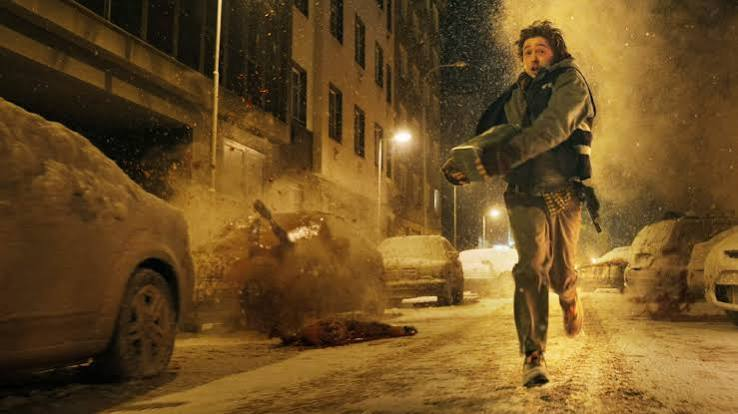
Abrams plays Bryan, a medical courier whose apparently ordinary assignment develops into a fight for survival.
Sony's official synopsis says Bryan becomes caught in a chaotic and horrifying night after unwittingly entering the crisis. Rather than beginning as a heavily armed action hero, the character gives the movie an opportunity to approach the Resident Evil world through someone considerably less prepared for what he encounters.
That is an interesting choice for a franchise built around survival.
The original games became famous partly because players often felt vulnerable. Ammunition could be limited, environments were dangerous and deciding whether to fight or escape could be as important as defeating an enemy.
Building the movie around an overwhelmed courier potentially brings some of that vulnerability back to the screen.
Zach Cregger Is the Biggest Reason Horror Fans Are Watching
The director is another major reason the movie has attracted attention.
Cregger established himself as a prominent modern horror filmmaker with Barbarian before following it with Weapons. His films frequently mix frightening situations with unexpected humour and abrupt tonal changes.
That combination has carried into Resident Evil. Recent coverage of the film has highlighted its mixture of horror and comedy, with Cregger saying test screenings helped the filmmakers adjust that balance during development.
For Resident Evil, that tonal balancing act matters. Previous adaptations have ranged from action-heavy spectacle to more direct attempts at recreating the games. Cregger's version is trying another route: maintaining the survival-horror atmosphere while telling a self-contained cinematic story.
Early Reviews Focus on Faithfulness to the Games’ Feeling
The first wave of reviews and reactions has focused heavily on whether the film actually feels like Resident Evil.
That distinction matters because video-game adaptations face an unusual challenge. Reproducing recognisable characters and locations can satisfy fans visually, but games are interactive experiences. The tension of personally exploring a dangerous corridor or deciding whether to open a suspicious door cannot be transferred directly to a passive movie.
Cregger has instead talked about recreating the rhythm of the games, and early reviews have highlighted the movie's survival-horror structure and game-inspired progression. Entertainment Weekly described it as a standalone story designed around the atmosphere of the source material, while other early reviews have similarly focused on its attempt to capture the experience rather than reproduce a specific game.
Raccoon City Remains Central
Even with new characters, the movie retains one of Resident Evil's most recognisable locations.
Raccoon City has been central to the franchise for decades. What initially appears to be an American city becomes the setting for a catastrophic biological outbreak connected to the Umbrella Corporation.
For fans, returning there immediately creates expectations about abandoned streets, infected residents, hidden laboratories and increasingly disturbing creatures.
The new movie uses that familiar setting while placing a different protagonist inside the disaster, effectively allowing audiences to see another person's experience of the wider catastrophe.
The Film Has a 90-Minute Runtime
The new Resident Evil runs approximately 90 minutes, according to current theatrical listings and Rotten Tomatoes.
That comparatively tight runtime fits the film's survival-night structure. Rather than constructing a sprawling mythology-heavy epic, the movie centres on a rapidly escalating sequence of events around Bryan.
For horror, that can be an advantage. A compressed story leaves less room for tension to dissipate and can make the experience feel closer to a continuous escape scenario.
Resident Evil Has a Complicated Movie History
The franchise is no stranger to Hollywood.
The earlier live-action film series starring Milla Jovovich developed its own continuity and became commercially successful even as it increasingly departed from the plots of the games.
Later, Resident Evil: Welcome to Raccoon City attempted a more recognisable game-inspired approach.
The 2026 movie effectively resets the cinematic strategy again.
Instead of continuing either previous film continuity, Cregger's version introduces another entry point. That means newcomers do not need to watch the previous Resident Evil films before seeing this one.
Video-Game Movies Have Changed Dramatically
The timing also helps explain why expectations are high.
Hollywood's relationship with video games has changed considerably. Game adaptations were once routinely treated as risky projects with poor critical reputations, but successful modern adaptations have demonstrated that enormous gaming audiences can translate into mainstream film and television interest when the underlying material is treated carefully.
That has changed what fans expect.
Recognisable costumes or monsters are no longer enough. Audiences increasingly want adaptations to understand why the original game worked in the first place.
For Resident Evil, that means atmosphere, vulnerability, exploration and survival are just as important as zombies.
Horror and Gaming Audiences Are Converging
Resident Evil also occupies an unusually strong position because it appeals to two established audiences.
Horror fans may arrive because of Cregger's track record, even if they have never played the games. Gaming fans may arrive because Resident Evil remains one of the most recognisable survival-horror properties in the world.
Combining those groups gives the movie an opportunity to reach beyond the audience of previous adaptations.
The challenge is satisfying both without making the film dependent on decades of game lore.
What to Know Before Watching
New viewers do not need an encyclopedic understanding of Resident Evil.
The essential premise is straightforward: dangerous biological experiments have created horrifying consequences, and Raccoon City becomes the setting for a rapidly escalating nightmare.
Fans, however, will likely be watching closely for connections to the games, visual references and familiar pieces of the wider mythology.
Cregger has deliberately positioned the movie so those references can reward longtime players without making them mandatory homework for everyone else.
Can Resident Evil Finally Crack the Video-Game Movie Formula?
That is the larger question surrounding the release.
The franchise has already proved that Resident Evil movies can attract audiences. What has been much harder is producing an adaptation that simultaneously satisfies horror viewers, movie critics and fans of the games.
Cregger's strategy is unusual because he is not attempting to solve that problem by reproducing a game exactly.
He is instead borrowing its rules.
A vulnerable protagonist. A terrible night. Raccoon City. Increasingly dangerous environments. Monsters waiting somewhere ahead.
Whether audiences ultimately embrace that approach will become clearer as the movie begins its theatrical run.
But on September 18, 2026, Resident Evil has officially returned to cinemas with perhaps its clearest attempt yet to make watching the movie feel like surviving the game.