Lionel Messi Reaches 100 Inter Miami Goals as His American Chapter Hits Another Milestone
Lionel Messi's move to the United States was always going to be about more than the final years of one extraordinary football career.
It was also an experiment.
Could one of the sport's greatest players transform the profile of a club, attract new audiences to Major League Soccer and maintain his extraordinary scoring output in a completely different football environment?
Three years after joining Inter Miami, another number provides part of the answer.
100 goals.
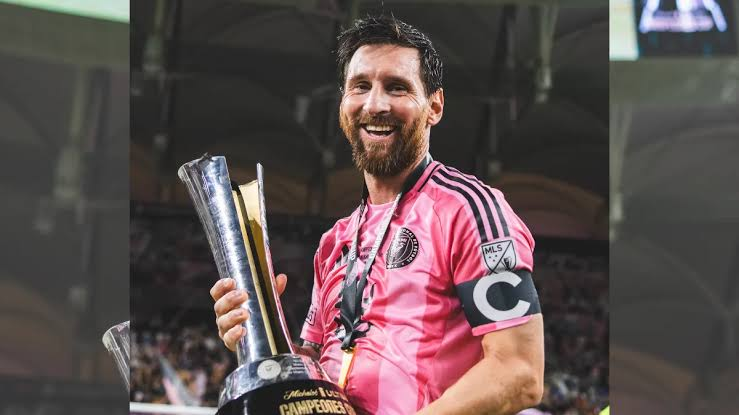
Messi reached his century for Inter Miami on Wednesday as the Florida club defeated Mexican side Cruz Azul 2–0 to win the Campeones Cup.
The Argentine scored after 24 minutes, reaching 100 Miami goals in only his 115th appearance for the club. Casemiro later added the second goal.
For almost any footballer, 100 goals for one club would represent a career-defining achievement.
For Messi, it becomes another milestone in a career overflowing with them.
The Goal Came With a Trophy Attached
The setting made the century particularly memorable.
This was not a routine league match.
The Campeones Cup brings together the reigning MLS Cup champion and Mexico's Campeón de Campeones winner, creating a competitive meeting between leading clubs from the two major North American leagues.
Inter Miami faced Cruz Azul at Nu Stadium in Florida.
Messi opened the scoring in the first half before Miami completed the 2–0 victory.
That meant his 100th club goal did not simply enter the record book.
It contributed directly to another trophy.
100 Goals in 115 Matches
The speed of the achievement is striking.
Messi needed only 115 appearances to reach the century for Miami.
That works out to roughly 0.87 goals per appearance.
Goals per game never tell the entire story of a player's influence, particularly with Messi.
His game has always involved creating opportunities as well as finishing them.
But scoring at close to a goal per appearance across more than 100 matches demonstrates that his arrival in America was not simply a ceremonial final chapter.
He continued producing.
Miami Changed Almost Immediately
Messi joined Inter Miami in 2023 after leaving Paris Saint-Germain.
The effect was immediate.
Attention around the club exploded.
Tickets became significantly more sought after. Inter Miami merchandise appeared around the world. Matches involving the club suddenly attracted audiences who previously paid limited attention to MLS.
But commercial attention alone would not have sustained the story.
Miami needed sporting success too.
Messi helped deliver it.
His arrival coincided with the club's first major trophy when Miami won the Leagues Cup in 2023.
More success followed as the team developed from a globally recognised curiosity into a side expected to compete for trophies.
The 100-goal milestone reinforces how central Messi has been to that transformation.
His Influence Extends Beyond Miami
Messi's American career has also had implications for Major League Soccer.
Football has occupied an unusual position in the United States.
The sport has enormous participation at youth level and a huge audience for international tournaments and European leagues.
But domestic professional soccer competes for attention with deeply established American sports including the NFL, NBA, Major League Baseball and NHL.
Messi gave MLS something extremely difficult to manufacture through marketing alone:
global attention.
A supporter in Argentina, India, Spain or Japan might never have searched for an Inter Miami match before 2023.
Messi provided a reason.
That international attention increased the visibility not just of Miami but of opposing MLS clubs whenever they faced him.
The Entertainment Effect Matters
Modern elite sport is also part of the entertainment economy.
Fans do not simply follow results.
They consume highlights, interviews, documentaries, social-media clips, merchandise and behind-the-scenes content.
Few athletes generate that ecosystem as powerfully as Messi.
A single goal can become a global digital event within minutes.
Clips circulate internationally.
Reaction videos appear.
Football accounts analyse the finish.
Sponsors and broadcasters benefit from the attention.
The player's value therefore extends beyond what happens during 90 minutes.
This helps explain why superstar athletes can influence the commercial trajectory of an entire league.
Messi's Miami Era Came After an Extraordinary Career
Any discussion of Messi in the United States inevitably sits beside everything that came before it.
He became synonymous with Barcelona, where he developed from a teenage prospect into one of football's defining players.
He later spent two seasons with Paris Saint-Germain.
At international level, the long pursuit of a major senior trophy with Argentina eventually turned into a remarkable period of success, including the 2022 World Cup.
By the time he arrived in Miami, there was little left for him to prove in conventional career terms.
That made the American chapter unusual.
Instead of chasing validation, Messi entered a league where his presence could help build something.
Why 100 Still Matters
It would be easy to treat Messi's 100th Miami goal as simply another statistic.
But milestones become significant because they provide a way of measuring an era.
One hundred goals means the Miami period is no longer a short late-career stop.
It has become a substantial body of work.
There have been enough matches, goals and trophies for the period to develop its own identity within Messi's career.
That is especially noteworthy because expectations were difficult to define when he arrived.
Would he play regularly?
Would his scoring decline dramatically?
Would Miami's global attention fade after the initial excitement?
Reaching 100 goals provides a straightforward answer to at least one of those questions.
His production remained exceptional.
North American Football Is Entering a Bigger Era
Messi's milestone also arrives during an important period for football across North America.
The United States, Canada and Mexico hosted the expanded 2026 FIFA World Cup earlier this year, bringing unprecedented attention to the sport across the region.
Club football now has an opportunity to retain some of that audience.
Competitions connecting MLS and Liga MX can play a role.
So can internationally recognised players.
The challenge is converting event-driven excitement into long-term supporter interest.
Messi cannot accomplish that alone.
But his presence has provided a rare window during which global football audiences are paying unusually close attention to an American club.
The Question Eventually Becomes Legacy
Every great athlete eventually reaches the point where individual performances are discussed alongside legacy.
For Messi, that conversation started years ago.
His Barcelona records, Ballon d'Or awards, Champions League victories and World Cup success already established his place in football history.
Miami adds something different.
It shows what happens when an established global superstar enters a developing football market and becomes part athlete, part cultural event and part catalyst for commercial growth.
The success of that experiment cannot be measured only through goals.
But goals remain the simplest place to begin.
Another Number for an Extraordinary Career
Football constantly generates statistics.
Most disappear quickly.
A century carries more permanence.
100 goals in 115 Inter Miami appearances.
And number 100 arrived in a cup final that ended with another trophy.
There will eventually be a final Messi match.
Until then, milestones like this continue extending a career that has repeatedly resisted ordinary expectations about longevity and performance.
His move to Miami once looked like the beginning of an epilogue.
One hundred goals later, it has become a significant chapter of its own.