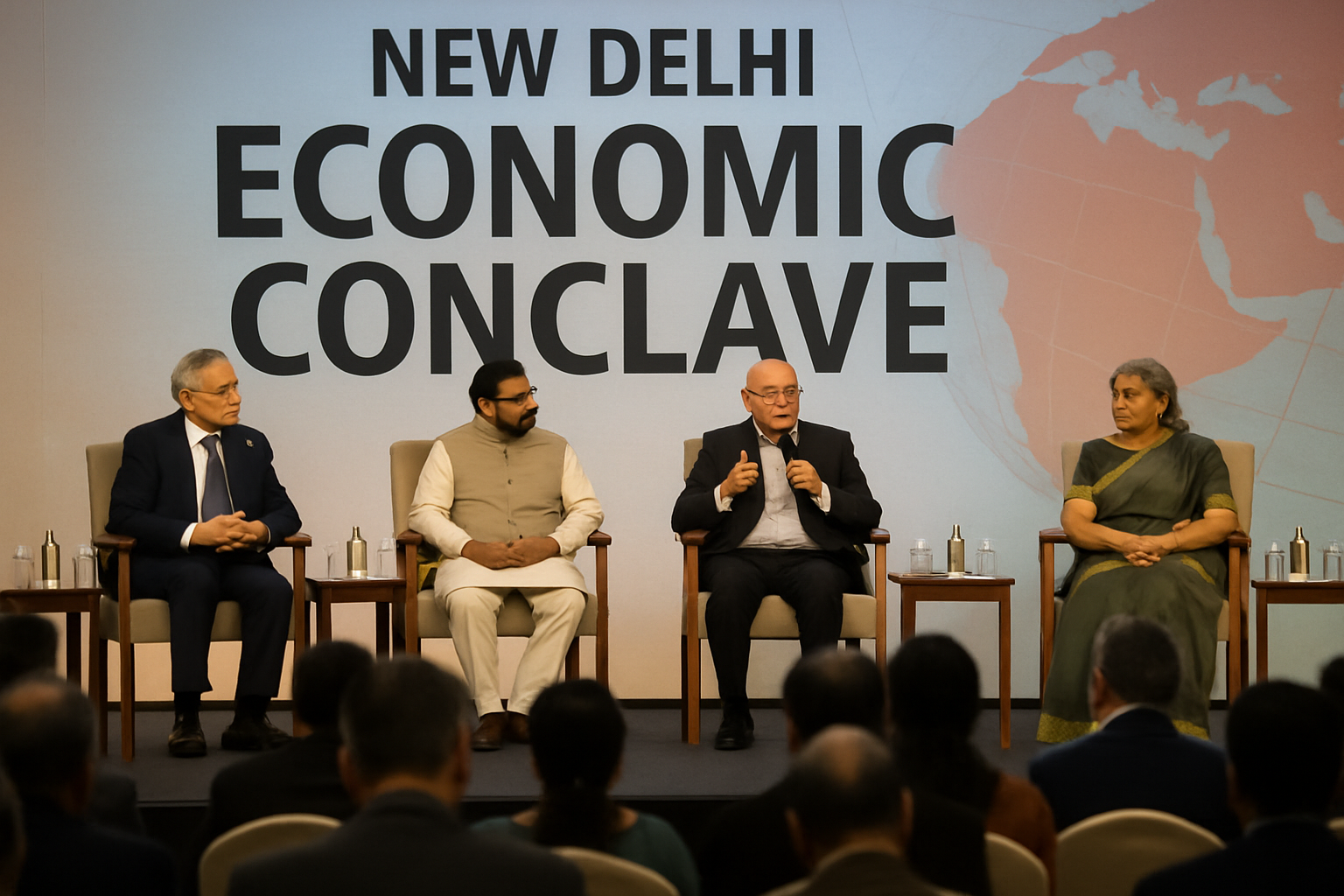
New Delhi. On October 4, 2026, NITI Aayog member and veteran economist Arvind Virmani said he was maintaining his forecast that India will expand by 7 percent in the current year, but he underlined a much wider margin of error than usual. Speaking on the sidelines of the Kautilya Economic Conclave, Virmani said his projection carries an uncertainty range of plus or minus one percentage point, reflecting heightened external and domestic risks.
Why the cautious tone matters
Virmani’s decision to hold the headline forecast steady, while explicitly enlarging the uncertainty band, signals a pragmatic shift in public commentary by a senior policy adviser. India’s recent data have shown resilient domestic demand, but the external environment has become less predictable. Persistently high crude oil prices, tighter global monetary policy, and unresolved trade frictions were among the factors Virmani cited as grounds for caution.
For markets and policymakers, the distinction between a single point forecast and a forecast with a wide uncertainty range is important. A 7 percent central estimate leaves India among the fastest growing large economies, but the plus or minus one point range implies growth could be as low as 6 percent if adverse shocks materialise, or as high as 8 percent should conditions improve. That variation matters for tax receipts, fiscal room, corporate earnings and interest rate expectations.
Context: growth has been strong but headwinds are rising
India’s economy posted a strong start to the fiscal year after an unexpectedly robust quarter earlier in 2026, supported by household consumption and public investment. Business surveys have generally signalled continued expansion in services and manufacturing, sustaining optimism among domestic forecasters.
However, Virmani and other commentators have pointed to several cross currents. Global crude prices have moved higher in recent months, lifting inflationary pressures and increasing the import bill. At the same time, central banks abroad have remained vigilant about inflation, raising borrowing costs in many advanced economies. Higher global yields have put pressure on emerging market currencies and capital flows, adding to the policy dilemma for India’s central bank.
Implications for policy and markets
The wider uncertainty range bolsters the argument for flexible policy. If inflationary pressures intensify, the Reserve Bank of India will face pressure to tighten, even as fiscal and growth objectives call for a supportive stance. Markets will watch incoming data on consumer prices, trade, and capital flows closely, and volatility in bond and foreign exchange markets could increase if global conditions swing.
For businesses and investors, the message is to plan for scenario risk. Corporates should stress test investment and working capital plans against both slower growth and faster inflation outcomes. Portfolio managers and foreign investors will be sensitive to any shifts in monetary settings and currency moves that flow from changing external conditions.
Payments reform and structural issues
Virmani also reiterated support for a gradual move toward cost based merchant discount rates for the Unified Payments Interface, or UPI, after the platform’s initial expansion was supported by subsidies. That comment underscores ongoing debates about how to make digital payments sustainable while preserving affordability and competition.
Broad reforms that reduce supply side bottlenecks and improve competitiveness will shape how resilient India’s growth path proves to be. Public investment in infrastructure and measures that deepen manufacturing and exports remain central to converting a favourable headline growth rate into durable gains in employment and incomes.
What to watch next
In the coming weeks, several data points and policy decisions will be watched for signs of which end of Virmani’s uncertainty band is more likely. Key items include inflation prints, the Reserve Bank of India’s monetary policy reaction, and progress in global trade talks and energy markets. Any sharp moves in oil prices or world interest rates could quickly narrow or widen the risk envelope for India.
For now, Virmani’s calibrated forecast is a reminder that headline growth numbers do not tell the full story. The economy may remain among the world’s fastest growing large economies, but the path there is not linear, and preparing for both upside and downside scenarios is a practical necessity for policymakers, businesses and investors alike.