India Warns New US Tariff Threat Could Disrupt Trade and Global Energy Markets
A new confrontation over Russian oil is threatening to spill into one of the world's most important trading relationships.
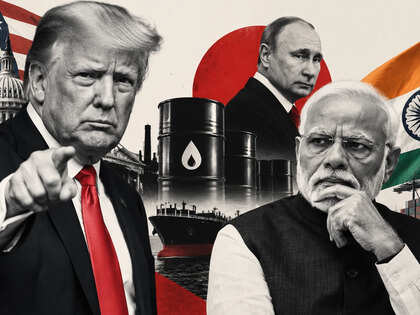
India has warned the United States that potential new tariffs targeting countries purchasing Russian energy could damage bilateral relations and create wider consequences for international energy markets.
The warning came after the US House of Representatives passed legislation designed to increase economic pressure on Russia over its war in Ukraine.
Among its most consequential provisions, the legislation would give the US president authority to impose tariffs of as much as 100% on countries including India and China in an effort to reduce their purchases of Russian oil and gas. The legislation has been sent to President Donald Trump to be signed into law.
For businesses, the dispute reaches far beyond diplomacy.
India and the United States trade enormous quantities of goods and services, while India is also one of the world's largest energy consumers.
Any major disruption could therefore affect exporters, manufacturers, consumers and energy markets across several countries.
India Says Energy Security Comes First
India's response has focused heavily on the need to secure affordable energy for its population and economy.
The country's foreign ministry said New Delhi had already explained to Washington the possible implications of additional tariff measures for both the bilateral relationship and international energy markets.
India also said it remained committed to sourcing energy from a diverse range of suppliers based on market conditions.
That position reflects a fundamental economic reality.
India is the world's third-largest oil importer.
Its rapidly developing economy requires enormous amounts of energy for transport, manufacturing, electricity generation and other economic activity.
Changes in the price India pays for crude oil can eventually influence businesses and consumers throughout the economy.
Why Russian Oil Matters
Russia became an increasingly important supplier to India after Moscow's full-scale invasion of Ukraine in 2022 prompted extensive Western sanctions.
As some traditional buyers reduced Russian purchases, discounted crude became attractive to countries willing to continue trading with Moscow.
India emerged as one of the major buyers.
For New Delhi, the argument has consistently centred on economics and energy security: a country with a huge population needs access to reliable and competitively priced fuel.
The US and other Western governments view the issue differently.
They have attempted to reduce the revenue Russia receives from energy exports because those revenues support the Russian state during the war.
That creates a difficult collision between sanctions policy and global energy economics.
A 100% Tariff Would Be a Serious Economic Tool
The legislation does not mean a 100% tariff has automatically been placed on all Indian exports.
That distinction is important.
Instead, it would provide the US president with authority to impose tariffs reaching that level as part of pressure on countries purchasing Russian energy.
Even the possibility can influence business decisions.
Importers may become reluctant to sign long-term contracts if they cannot predict future duties.
Exporters may hesitate to invest in additional capacity.
Manufacturers can begin searching for alternative suppliers.
Financial markets may also reassess companies heavily exposed to affected trade routes.
Tariff uncertainty can therefore have an economic impact even before the highest possible rate is actually applied.
The US Is a Major Market for Indian Goods
The stakes are significant because America is India's largest export destination.
Indian goods exports to the United States reached $42.79 billion between April and August, up from $40.39 billion during the same period a year earlier, according to official figures cited by Reuters.
Those exports span multiple industries.
A serious deterioration in trade relations could consequently affect businesses far removed from the oil industry.
This demonstrates why modern trade disputes rarely remain confined to the product that originally caused them.
A disagreement over crude oil can eventually influence manufacturing, investment, currencies and consumer prices.
Businesses Dislike Uncertainty
Companies can adapt to many economic conditions if they know the rules.
Uncertainty is more difficult.
A manufacturer deciding whether to build a new facility may calculate labour costs, expected demand, taxes, transport expenses and energy prices.
Tariffs introduce another variable.
If the tariff could change dramatically because of geopolitical developments, long-term planning becomes harder.
Companies may delay investments until the situation becomes clearer.
Others may redesign supply chains to reduce exposure to a particular market.
This is one reason trade tensions can influence economic activity even without immediately stopping trade.
Energy Markets Could Feel the Effects
There is also a wider question about what happens if major buyers reduce Russian oil purchases.
Oil is a global commodity.
Redirecting millions of barrels between countries can alter shipping routes, discounts and competition between suppliers.
India has warned that policy changes affecting its purchases could have implications for the international energy market.
That concern comes at a sensitive moment.
Oil markets are already volatile. Brent crude remained above $100 a barrel on Thursday even after falling roughly 3% as immediate concerns about supply disruptions eased.
Additional disruption to global oil flows could therefore matter beyond India, Russia and the United States.
Consumers Ultimately Feel Energy Costs
Energy disputes can sound distant from everyday life.
They are not.
Oil affects transport.
Transport affects the cost of moving food and manufactured goods.
Fuel costs influence airlines, logistics companies and agricultural operations.
Higher energy prices can also contribute to broader inflation.
That means a geopolitical disagreement over who purchases oil from whom can eventually influence household budgets thousands of kilometres away.
This interconnectedness is one reason energy policy remains such a difficult tool of international pressure.
Governments want sanctions to impose economic costs on targeted states without creating excessive costs for their own consumers.
Achieving both objectives simultaneously is difficult.
India and the US Have Much More at Stake
The dispute also exists within a much broader relationship.
India and the United States cooperate across technology, defence, investment and trade while sharing strategic interests in the Indo-Pacific.
At the same time, the two countries do not agree on every foreign-policy issue.
India has historically pursued a degree of strategic independence in its international relationships.
Energy purchasing is one area where those differences have become particularly visible.
This means the current disagreement should not automatically be interpreted as a complete breakdown in US–India relations.
But New Delhi's warning shows that energy sanctions can create friction even between countries that cooperate extensively elsewhere.
Global Trade Is Becoming More Political
The broader lesson for businesses is that international commerce is increasingly shaped by geopolitics.
Companies once primarily evaluated suppliers according to price, reliability and quality.
Those factors still matter.
But executives must increasingly consider sanctions, tariffs, export controls and political relationships between countries.
A supplier that appears commercially attractive today can become significantly more expensive if a government introduces new duties tomorrow.
A market that offers strong demand can become harder to access after a diplomatic dispute.
Supply-chain strategy has therefore become partly geopolitical strategy.
What Happens Next Matters Beyond India
Much will depend on how the new US authority is ultimately used.
There is a substantial difference between possessing the legal ability to impose a tariff and applying the maximum rate across a large volume of trade.
Negotiations could also influence the final economic impact.
But companies do not have the luxury of ignoring the possibility.
India has made its position clear: energy security will remain a priority, and New Delhi believes punitive measures could affect both its relationship with Washington and international energy markets.
The disagreement therefore sits at the intersection of three enormous forces — trade, energy and geopolitics.
How those forces interact will determine whether the latest tariff threat remains diplomatic pressure or develops into a much larger economic confrontation.