One of India's most famous corporate groups is facing an unusually public internal battle that has begun spilling into financial markets.
Companies belonging to the Tata Group lost approximately $4 billion in market value on Friday, September 18, as investors reacted to a widening dispute involving Tata Sons, the group's holding company, and Tata Trusts, the charitable organisations that collectively control a majority stake in Tata Sons.
The dispute matters far beyond a single boardroom. Tata's businesses span technology, automobiles, airlines, steel, hotels, consumer products, power and financial services, with companies including Tata Consultancy Services, Tata Motors and Air India forming part of a corporate network whose influence extends throughout India and internationally.
What Is Happening Inside Tata?
At the centre of the dispute is the leadership of Tata Sons.
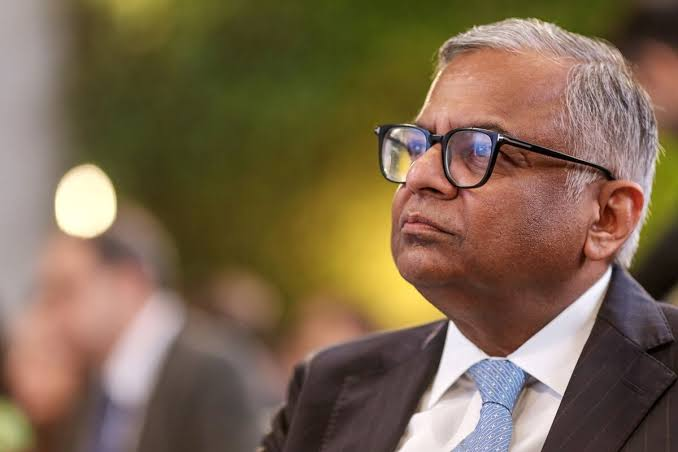
Natarajan Chandrasekaran, commonly known as N. Chandrasekaran, has agreed to remain chairman for another five years after previously preparing to leave the role. The Tata Sons board backed his reappointment, but the decision has faced opposition from Tata Trusts, which owns roughly two-thirds of the holding company.
The disagreement has exposed an unusual divide between the operating leadership of the Tata empire and the charitable trusts that have historically exercised substantial influence over the group.
Tata Trusts has challenged the way the reappointment was handled, creating questions over governance procedures and who ultimately holds authority over major decisions affecting Tata Sons.
Why Tata Matters So Much to India
Tata is not an ordinary Indian company.
The group traces its history back more than 150 years and has become deeply embedded in India's industrial development. Its businesses employ large numbers of people and operate across sectors ranging from software outsourcing and automobiles to aviation and hospitality.
Internationally, Tata owns or controls businesses associated with brands such as Jaguar Land Rover and Tetley, while its technology subsidiary TCS is one of India's most globally recognised companies.
That scale means instability at the holding-company level attracts attention from investors even when the individual operating companies continue conducting business normally.
Investors Reacted Quickly
The dispute became much more visible to financial markets on Friday.
Reuters calculated that Tata Group companies collectively lost around $4 billion in market capitalisation during the session as investors reassessed the potential implications of the disagreement.
Tata Consultancy Services fell nearly 4%, while Tata Chemicals suffered a considerably steeper decline of around 11%. Other Tata companies experienced varying market reactions, demonstrating that investors were not treating every subsidiary identically.
The selloff reflects uncertainty rather than evidence that the group's underlying businesses have suddenly stopped functioning. Investors are instead trying to understand whether the governance dispute could influence leadership, strategy, capital allocation or future corporate transactions.
A Tata Sons Listing Has Become Another Flashpoint
Another major question involves whether Tata Sons itself could eventually become publicly listed.
A stock-market listing would represent a historic change for the privately held company sitting at the centre of the Tata corporate structure. It could provide a public valuation for the holding company while changing the relationship between its major shareholders and the broader market.
The issue is particularly important because the Shapoorji Pallonji Group holds approximately 18.4% of Tata Sons, making it the company's second-largest shareholder after Tata Trusts. Reuters reported that the group has supported a listing and proposed monetising part of its stake.
A potential listing therefore adds a significant financial dimension to what might otherwise appear to be an internal governance disagreement.
Tata’s Global Partners Have a Stake in Stability
The group's international connections make the situation relevant outside India as well.
Tata businesses have relationships with major global companies and investors, while brands under its control operate across multiple continents. Governance uncertainty at the parent level can therefore attract attention from partners, lenders and institutional shareholders around the world.
That does not mean the dispute will necessarily damage those relationships. Individual Tata companies have their own management teams, boards and business strategies.
However, prolonged disagreement at the top of a major conglomerate can make strategic decisions more difficult, particularly when large investments or restructuring plans require coordination.
Air India and Jaguar Land Rover Add to the Challenge
The boardroom battle also comes at a complicated moment for some of Tata's highest-profile businesses.
Air India remains one of the group's most visible operations following Tata's acquisition of the airline from the Indian government and its subsequent efforts to modernise the carrier.
Jaguar Land Rover, meanwhile, exposes Tata to the highly competitive global automotive industry, where manufacturers are investing heavily in electric vehicles, software and new technologies.
Managing those businesses requires substantial capital and long-term strategic planning. That makes clarity at the Tata Sons level particularly important.
The Wider Indian Market Is Already Under Pressure
Tata's internal dispute is unfolding during a difficult period for Indian equities more broadly.
Indian shares recorded a sixth consecutive weekly decline on September 18, their longest weekly losing streak since 2020. High oil prices and tighter global monetary conditions have weighed on sentiment.
India is particularly sensitive to expensive crude oil because it imports a large share of its energy requirements. Higher prices can increase inflationary pressure, raise corporate costs and affect the country's trade balance.
The combination of global market uncertainty and one of India's largest corporate groups facing internal tension therefore created an uncomfortable backdrop for investors.
India’s Broader Economy Still Shows Strength
The corporate dispute should not be confused with a collapse in India's wider economy.
India's net direct tax collections rose 13% year-on-year to 12.1 trillion rupees between April 1 and September 17, according to tax department figures released Friday. Gross direct tax collections increased by more than 15%.
Moody's also raised its forecast for India's fiscal 2027 real GDP growth to 7%, up from an earlier estimate of 6%, while warning about risks from high energy prices and food inflation.
These indicators illustrate why the Tata story should be viewed primarily as a major corporate-governance issue rather than evidence that India's entire economy is deteriorating.
What Happens Next at Tata?
Investors will now watch how Tata Sons and Tata Trusts attempt to resolve their differences.
Chandrasekaran's proposed five-year continuation provides one potential source of management continuity, but opposition from the controlling trusts means questions surrounding governance remain unresolved.
A prolonged dispute could increase scrutiny of Tata Sons' structure, its relationship with Tata Trusts and the possibility of a future public listing.
A negotiated resolution, by contrast, could allow attention to return to the performance of individual Tata businesses.
For India, the significance extends beyond the share prices of several listed companies. Tata has spent generations building a reputation as one of the country's defining corporate institutions.
That is why a dispute occurring largely inside a holding-company boardroom has become a national business story — and why global investors are watching what happens next.