
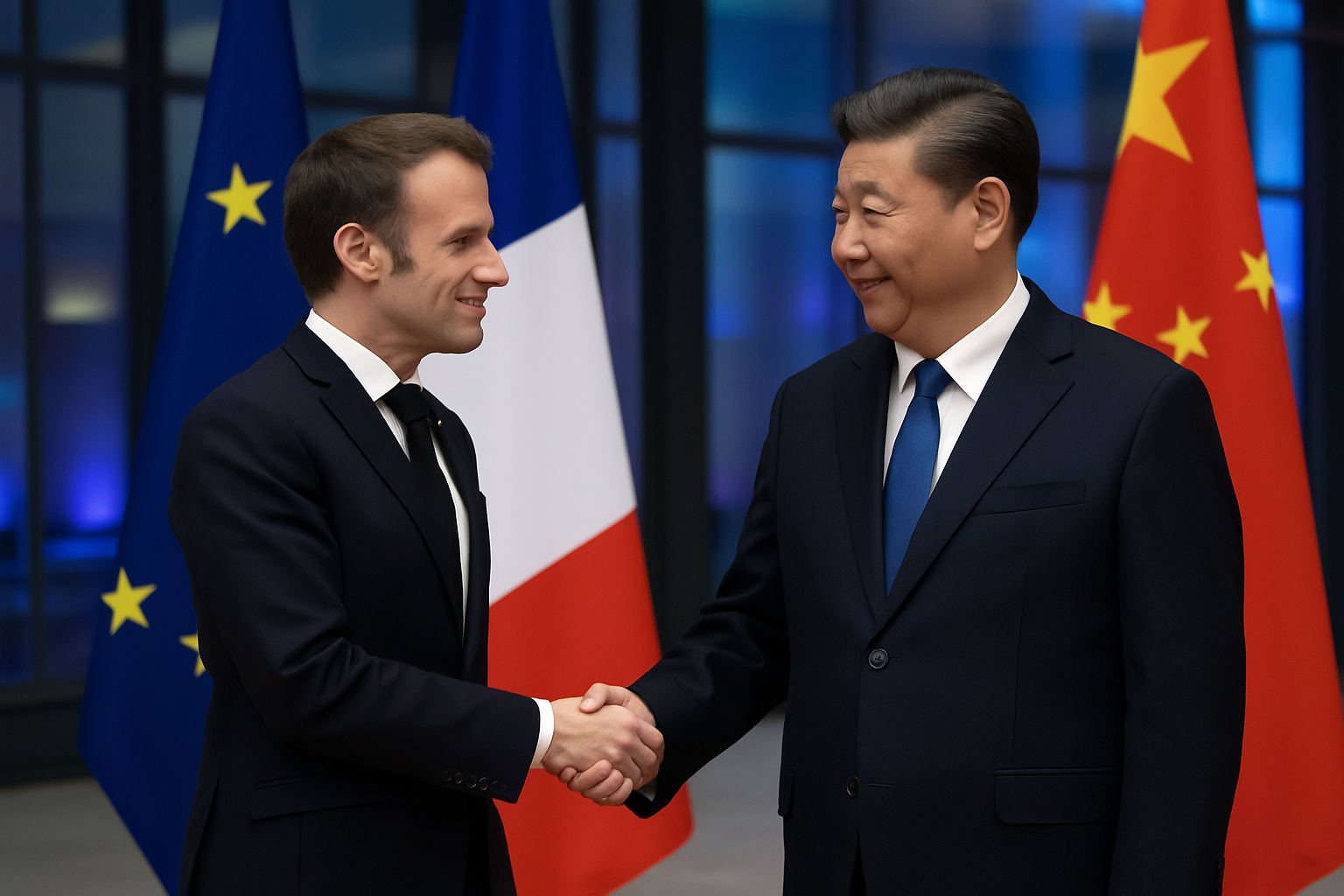
Xi frames AI as a shared responsibility at the White House
Chinese President Xi Jinping used the opening moments of his state visit to Washington to call for sustained U.S. China cooperation on artificial intelligence, saying the two countries have both the capability and the responsibility to develop and manage AI for good. Speaking at an arrival ceremony on September 24 and in readouts published on September 25, Xi urged continued dialogue on the risks and benefits of AI, and stressed that AI development must remain under human control and serve the well being of people.
Why the message matters for technology policy
The timing and tone of Xi’s remarks matter because they move AI policy from the technical and bureaucratic levels onto the presidential agenda. The United States and China are the two largest markets for advanced AI research, compute, model training, and chip development. Xi’s call for dialogue signals Beijing’s desire to shape international norms at a time when Washington is tightening export controls on advanced semiconductors and related technologies. It also creates space for negotiating practical mechanisms to reduce the risk of cross border incidents, even as both sides remain strategic competitors.
Trade, export controls and the chip supply picture
Over the last two years, U.S led restrictions have limited China’s access to the most advanced AI accelerators and certain manufacturing equipment, prompting Beijing to accelerate investments in domestic chip design and data center capacity. That industrial push has produced a string of new processor and cluster announcements from major Chinese firms and research groups. Xi’s message of cooperation should be read beside those industrial developments: China is signaling that it seeks formal channels to manage the competition, while continuing to pursue self reliance in core hardware and cloud scale compute.
From words to mechanisms, negotiators face hard choices
Concrete policy follow through will require negotiators to translate presidential-level rhetoric into operational mechanisms. Possible next steps could include confidence building measures for AI incidents, shared protocols for cross border data flows related to safety investigations, joint crisis communication channels, or limited technical exchanges on safety testing and red teaming. Any such mechanisms will need detailed rules about data access, intellectual property, and national security, making practical agreements difficult but not impossible.
Domestic audiences and strategic signaling
Xi’s emphasis on human control and public welfare also speaks to domestic and global audiences. Within China, leaders face pressure to demonstrate technological progress and to shield critical infrastructure from perceived foreign dependency. Internationally, Beijing is working to avoid a narrative that paints Chinese AI advancement solely as a security threat. By foregrounding cooperation and safety, Xi can press for recognition of China as a responsible AI power while preserving strategic autonomy in chips and platforms.
What industry and researchers will watch next
Technology companies, standards bodies, and research institutions will now look for follow up steps. Industry will seek clarity on whether any bilateral understanding could ease commercial frictions, for example by defining categories of permissible technical cooperation or by establishing channels for licensing sensitive items. Research communities will watch for shared safety protocols, data sharing arrangements, or joint research projects on issues like robustness, alignment, and misuse prevention. Any formal dialogue timeline or venue will be closely monitored by global partners and by firms whose supply chains cross both markets.
Implications for the global AI governance debate
Xi’s intervention elevates the broader argument that AI governance cannot be decided by a single country. If Washington and Beijing agree on even narrow, verifiable steps, it could provide a template for multilateral norms. At the same time, differences in political systems, legal regimes, and strategic priorities mean any joint framework will be limited in scope and likely focused on specific risks rather than broad, enforceable rules.
Bottom line
Xi Jinping’s appeal for dialogue on September 25, 2026 refocuses attention on AI as an arena of both rivalry and potential cooperation between the United States and China. The statement changes the tenor of high level diplomacy by putting joint management of AI risks on the agenda, but turning words into durable mechanisms will be technically difficult and politically sensitive. The next phase will test whether presidential rhetoric can be converted into operational channels that reduce the likelihood of harmful incidents while allowing both countries to pursue competitive advantage in chips, models, and compute infrastructure.